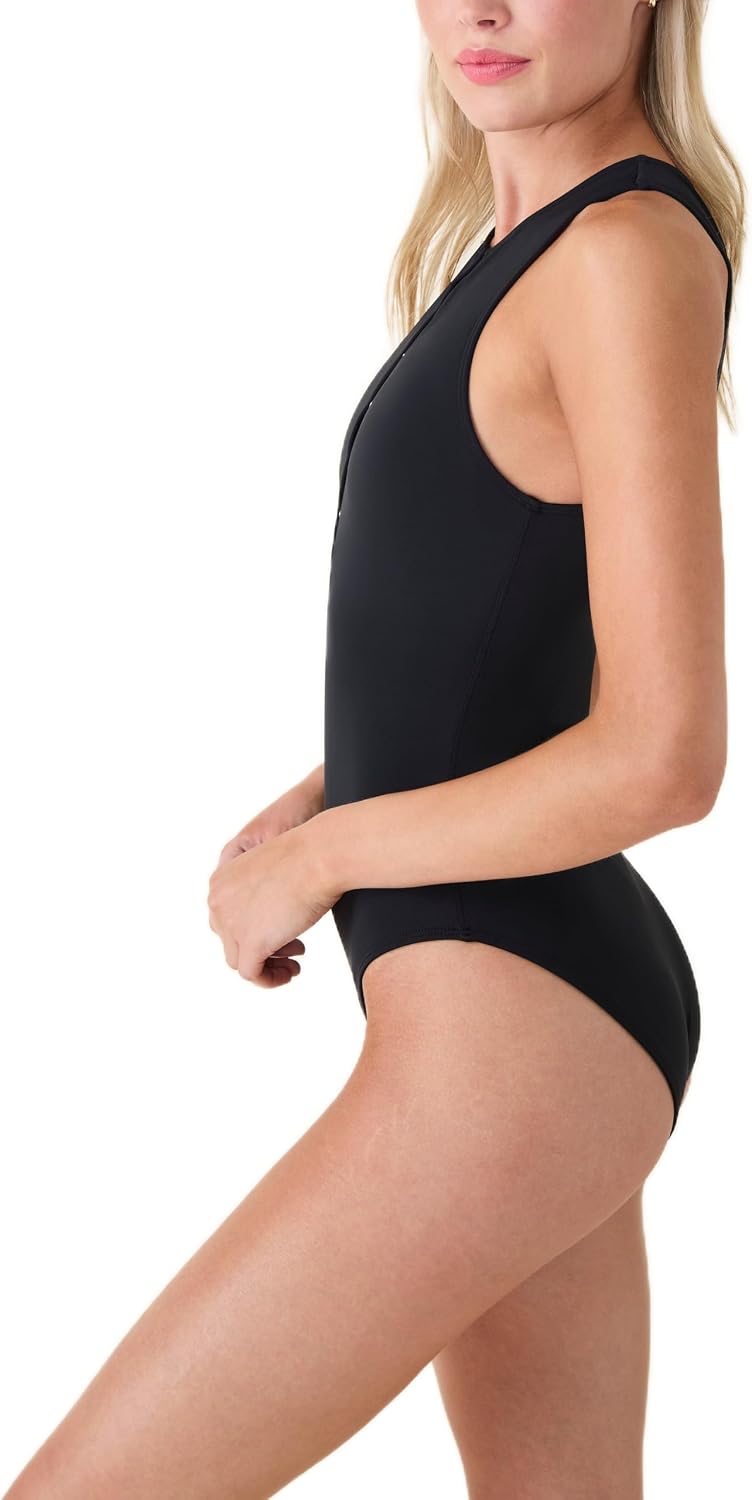
If you’ve been circling the $100–$120 swimwear tier — that middle ground where you’re paying more than a fast-fashion impulse buy but not yet committing to a $200+ designer piece — Andie Swim comes up constantly. The brand built its reputation on a direct-to-consumer (DTC) model, meaning it sells straight to shoppers online rather than through department stores, which theoretically lets it put more money into fabric and fit instead of retail markup. The two styles that drive most of the conversation are the Malibu and the Amalfi, both one-piece suits sitting at $112 as of spring 2026. This guide breaks down exactly what each suit is engineered to do, who the fit architecture actually serves, and whether that price point reflects genuine material integrity or clever positioning — so you can make a clean decision rather than a hopeful one.
| EDITOR'S PICKAndie Swim Women’s Malibu One P… | Mid-tierAndie Swim Women’s Amalfi One P… | Budget pickAndie Swim Women’s Malibu One P… | |
|---|---|---|---|
| Coverage | Medium | Full | Medium |
| Torso Fit | Regular | Regular | Long & Regular |
| Tummy Control | — | ✓ | ✓ |
| Fabric Type | Ribbed | — | — |
| Price | $128.00 | $112.00 | $112.00 |
| See on Amazon → | See on Amazon → | See on Amazon → |
What You’re Actually Buying at $112: The Material and Ethics Reality Check
Let’s start with the thing that matters most at this price tier before we get to silhouette: what’s the fabric, and does the sourcing story hold up?
Andie Swim’s core fabrication is an 80/20 nylon-elastane blend — nylon for structure and quick-dry performance, elastane (also sold under the brand name Lycra) for the stretch-and-recovery that keeps a suit from bagging out after an afternoon in the water. This is a widely used swimwear composition, not a premium differentiator on its own. What matters is the quality grade of that nylon and whether it carries any third-party verification.
Here’s where the honest assessment gets nuanced. As of this writing, Good On You’s brand profile for Andie Swim rates the brand in the “It’s a Start” tier — their middle band — noting that the brand uses some lower-impact materials but lacks comprehensive supply chain transparency. That rating is meaningful context: Andie Swim is not a greenwashing offender, but it’s also not in the same certification conversation as brands carrying OEKO-TEX STANDARD 100 (which verifies fabrics are free from harmful substances, tested at the fiber level) or bluesign approval (which certifies responsible resource use across the entire textile production chain). The Textile Exchange Preferred Fiber & Materials Market Report 2023 defines that hierarchy clearly — OEKO-TEX and bluesign represent process-level accountability; a brand simply using nylon-elastane without those marks is making a material choice, not a certified sustainability claim.
What Andie does offer is a domestic-style fit philosophy — suits engineered around real size diversity with consistent grading — and a quality-control reputation that holds up better than most brands at this price. Business of Fashion’s coverage of DTC swimwear scaling in 2024 noted that Andie’s model allows tighter feedback loops between customer returns data and fit revisions, which is a genuine structural advantage over wholesale brands that iterate annually.
By the numbers:
- Fabric: 80% nylon / 20% elastane
- Price point: $112 (both Malibu and Amalfi, standard sizing)
- Good On You rating: “It’s a Start” (mid-tier)
- Third-party certifications held: none confirmed as of May 2026
- Size range: XS–3X across most colorways
If you’re coming from a brand like Girlfriend Collective (bluesign-certified) or Vitamin A Swim (ECONYL recycled nylon), the honest tradeoff is this: Andie is likely to out-perform on fit consistency and accessible price, but it doesn’t deliver the supply-chain accountability those brands offer. That’s not a dealbreaker — it’s a deliberate trade-off you should make consciously, not by accident.
Malibu vs. Amalfi: Compression Architecture and Fit Profiles
This is the core of the decision. These two suits look similar in product photography — clean lines, minimal hardware, flattering coverage — but they’re engineered around meaningfully different body priorities.
The Malibu: Structure-Forward, Medium Compression
The Malibu is Andie’s most-reviewed suit, and the consistent pattern across owner reviews on the brand’s own site and in editorial coverage from Byrdie and Who What Wear is that it functions as a light-to-medium compression piece with a defined waist emphasis. The built-in underwire option (it comes in both underwire and wire-free versions) adds structured lift for fuller busts without the aggressive boning you’d find in a more performance-oriented suit.
Owners consistently report that the Malibu runs true to size in the torso but slightly generous in the bust — a common calibration note for wire-free structured suits. If you’re between sizes and carry more volume in the chest, reviewers suggest sizing down. If you’re between sizes and your primary concern is torso length (a common fit failure point for taller swimmers), the Malibu’s standard cut tends to work for inseam lengths up to about 5’8” before the straps start pulling.
The compression level here is best described as “shaping without restriction” — enough internal structure to smooth and support, not enough to feel like a compression garment. For active use (actual swimming, paddling), this is a feature: you won’t feel bound. For someone specifically seeking strong postpartum support or midsection compression, it may feel insufficient.
The Amalfi: Plunge Geometry and Softer Hold
The Amalfi is built around a deep-V plunge neckline and a softer overall hand (the way a fabric feels against skin — its drape and give). It uses the same 80/20 fabrication, but reviewers consistently describe it as feeling less structured than the Malibu — more resort-wear, less swimwear-with-a-job-to-do.
The Amalfi’s fit profile rewards a narrower shoulder-to-hip ratio. Owners with broader shoulders or a fuller chest report that the plunge can gap or shift with movement, particularly in the water. This isn’t a defect — it’s a silhouette designed around a specific geometry. Andie’s customer reviews note that the adjustable straps help, but the fundamental plunge architecture isn’t designed for high-movement activities.
Where the Amalfi wins decisively is aesthetics and packability. The softer construction means it travels better — less wrinkling, lighter weight in a bag — and the plunge creates an elongating vertical line that photographs well. For resort wear, editorial shoots, or a styling client whose priority is visual impact over athletic function, the Amalfi is the cleaner choice.
The core decision rule:
- Malibu if your reader/client needs defined support, plans to actually swim, has a fuller bust, or is investing in a “does-it-all” suit.
- Amalfi if the priority is aesthetic line, packability, resort versatility, and the wearer is comfortable with lighter internal structure.
Does the $112 Price Point Hold Up? A Framework for the Considered Buyer
This is the question that separates an impulse purchase from a considered investment, and the answer is genuinely conditional.
Where $112 makes sense:
If you’re building a capsule wardrobe and need a well-fitting, aesthetically neutral one-piece that can anchor multiple looks — sarong, cover-up, travel, actual swimming — Andie’s quality-to-price ratio is competitive. The fit engineering is more refined than most brands in the $70–$100 range, and the colorways are calibrated for longevity rather than trend-chasing. Reviewers consistently note that the fabric holds color and shape through a full season of use, which matters for cost-per-wear math.
Where $112 is a compromise:
If supply-chain transparency is a genuine editorial or personal criterion — not just a preference but a standard — $112 at Andie gets you a well-made suit without the certification architecture that justifies the same spend at a brand like Patagonia (recycled nylon, Fair Trade certified factories) or Vitamin A (ECONYL, domestic production transparency). The OEKO-TEX STANDARD 100 certification overview makes clear that the certification process involves third-party laboratory testing, not self-reporting — and that gap matters when you’re positioning a purchase as an environmentally considered choice.
For a styling client at the premium tier ($150–$300), Andie likely functions as a fill-in piece or a gateway brand rather than an anchor investment. For the emerging eco-shopper stepping up from fast-fashion swimwear, it’s a meaningful step forward. For the mid-tier buyer with $100–$130 to spend who’s choosing between Andie and Summersalt, the decision hinges on whether fit architecture (Andie’s strength) or brand-level sustainability credentials (Summersalt’s cleaner sourcing story) matters more to that specific buyer.
Practical Sizing Notes for Stylists and Informed Buyers
A few aggregated patterns worth knowing before you size or recommend:
Torso length: The Malibu and Amalfi both fit best on torsos in the 15”–17” range (hip bone to shoulder strap). Taller frames (5’9”+) commonly report strap tension. Andie does offer a long-torso sizing guide on their site — worth consulting before ordering if height is a factor.
Bust sizing: Andie’s internal sizing runs best for B–D cups in standard sizing. DD+ reviewers report more success in the Malibu (underwire version) than the Amalfi, where the plunge creates less lateral support structure.
Repeat-buyer behavior: Across owner reviews, a notable pattern is that buyers who try Andie first in the Malibu often return for a second suit — either another Malibu in a second colorway or an Amalfi for resort travel. That repeat-purchase signal is meaningful: it suggests the brand delivers on its core promise well enough to generate confidence for a second investment.
Care and longevity: Published care guidance from Andie recommends hand-washing in cold water and flat drying — standard protocol for elastane-containing swimwear. Owners who follow this report minimal stretch-out through a full season. Chlorine exposure accelerates elastane degradation in any suit at this fabrication level, which is worth flagging for clients who swim laps rather than float.
The If/Then Decision Framework
Here’s the clean summary for a buyer or stylist working through this decision:
If fit consistency and defined support are the primary criteria → Malibu, size to torso length, consider underwire version for D+ cups.
If aesthetic line, packability, and resort versatility are the priority → Amalfi, size true, assess shoulder width honestly before buying.
If supply-chain certification is a hard requirement → Neither suit currently meets that standard; redirect to Girlfriend Collective (bluesign) or Patagonia (Fair Trade/recycled nylon) at similar or slightly higher price points.
If the buyer is stepping up from fast-fashion swimwear and $112 represents a genuine stretch investment → Malibu is the safer first Andie purchase, given its stronger owner-satisfaction consistency and more versatile fit architecture.
If you’re curating for a premium client ($200+ tier) → Andie works as a travel-fill or secondary piece; anchor the wardrobe in certified brands and let Andie serve the “one more suit” role without inflating it beyond that.
The $112 price holds up when you’re buying for fit and aesthetics with eyes open about the certification gaps. It doesn’t hold up as a sustainability-first investment without more transparency from the brand. That’s an honest answer — and the kind that helps you make a decision you won’t revisit in six months.