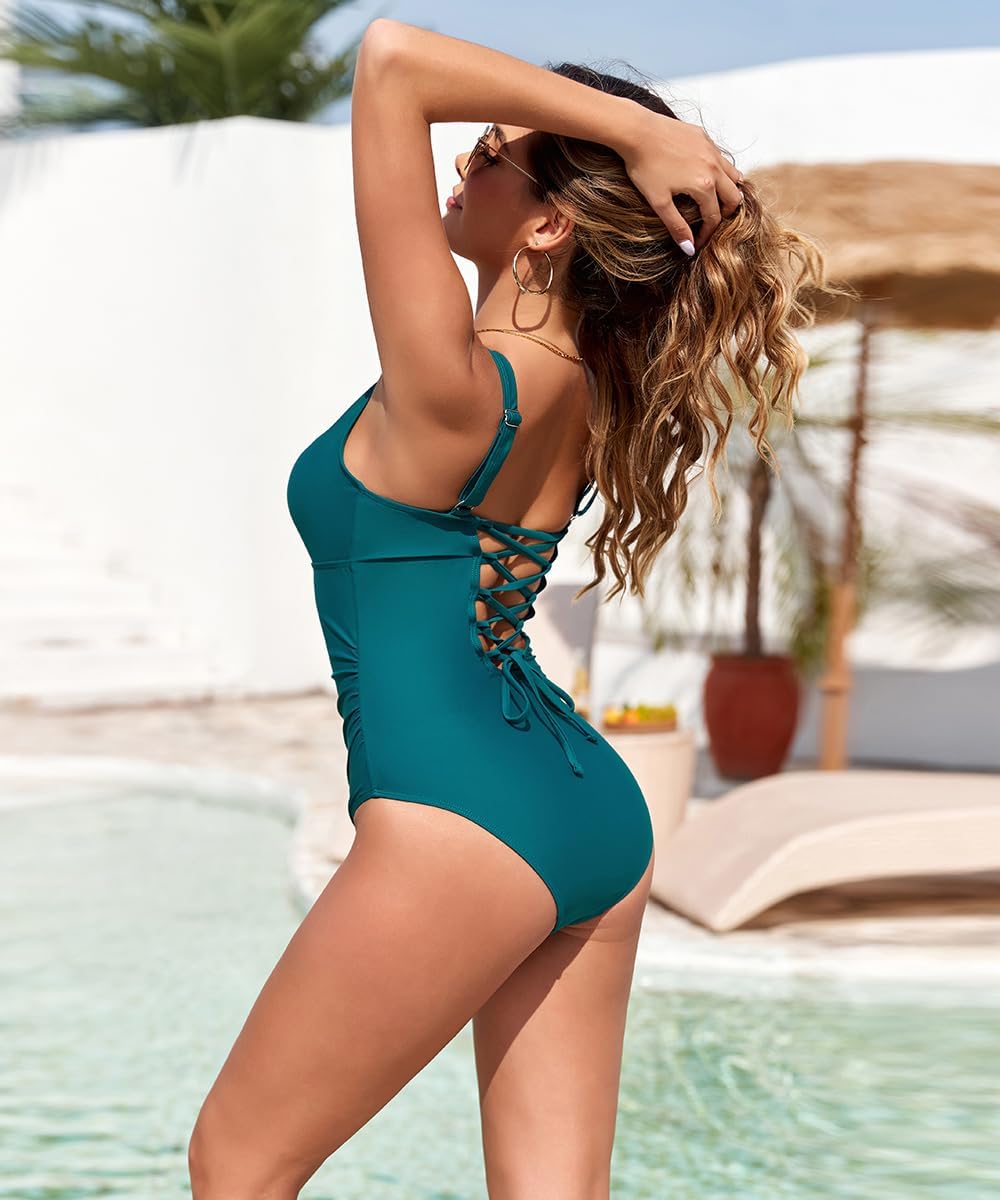
Let’s be honest about something most eco-fashion coverage won’t say out loud: the $200 swimsuit is the editorial gold standard around here, and for good reason. But not everyone’s first move into sustainable swimwear is a $280 Vitamin A bikini, and it doesn’t need to be. Sometimes you’re testing a silhouette, buying for a one-season rental trip, or just starting to shift your wardrobe toward better choices without blowing a month’s discretionary budget on a single piece. That’s a completely legitimate position, and it deserves a clear-eyed answer — not a condescending “well, the real eco options start at…” redirect.
This guide is for you if you’re eco-curious but price-constrained right now, or if you want a low-stakes way to learn what certifications and materials actually feel like before committing to the premium tier. We’ll show you what’s worth buying under $45, what you’re trading away compared to a certified mid-tier piece, and how to read the label so you don’t accidentally reward greenwashing with your $38.
What “Eco” Actually Means at This Price Point (And What It Doesn’t)
Before we get to picks, let’s define the terms you’ll see on every tag and product listing in this price range, because they do not all mean the same thing.
Recycled nylon — often marketed as ECONYL (a registered brand name from Aquafil) or generic “regenerated nylon” — is nylon yarn made from pre-existing waste: fishing nets, fabric scraps, industrial plastic. According to Ecocult’s explainer on recycled synthetics, the production process uses significantly less water and generates fewer greenhouse gases than virgin nylon, but it still produces microplastic shedding in the wash and isn’t biodegradable at end of life.
Recycled polyester (rPET) is made from post-consumer plastic bottles melted into fiber. It’s the most common “eco” claim in fast-fashion-adjacent swimwear because it’s cheap to source. Textile Exchange’s Preferred Fiber & Materials Market Report 2024 notes that rPET supply has grown dramatically as brands use it to hit ESG targets — which means the claim itself has become table stakes, not a differentiator.
OEKO-TEX STANDARD 100 (the certification from oeko-tex.com) means the finished fabric has been tested for harmful substances — pesticide residues, heavy metals, formaldehyde — and found safe for skin contact. It says nothing about environmental manufacturing practices or labor conditions, but it’s a meaningful floor for what touches your body.
GOTS (Global Organic Textile Standard) and bluesign certifications rarely appear under $45. If you see them at this price, look closely — those supply chains have auditing costs that make sub-$45 retail nearly impossible without margin compression that raises its own questions about labor.
At the under-$45 price point, you are almost never getting a GOTS or bluesign piece. What you can reasonably find: OEKO-TEX STANDARD 100 certification, credible recycled-fabric content claims, and brands that are transparent about their sourcing even if they haven’t yet achieved top-tier third-party verification.
By the Numbers: What Certifications Typically Appear at Each Price Tier
| Price Range | Certification You Can Realistically Expect |
|---|---|
| Under $45 | OEKO-TEX STANDARD 100, rPET/recycled nylon claims |
| $70–$130 | bluesign®, GOTS (for cotton pieces), ECONYL® licensed |
| $150–$300+ | bluesign + GOTS + brand-level supply chain audits |
Source: compiled from Textile Exchange’s 2024 market report and Good On You’s brand rating methodology.
The Picks: What We’d Actually Recommend
We want to be clear about how we arrive at these: our editorial team analyzes brand disclosures, certification documentation, aggregated owner reviews, and third-party rating platforms like Good On You. We haven’t physically tested these pieces — what we’re giving you is the research, organized so you can make the call.
Recycled-Fabric Basics from Amazon’s Sustainable Swimwear Tier
Amazon’s sustainable marketplace has gotten genuinely more navigable in 2025–2026. A handful of brands now surface pieces with verified OEKO-TEX STANDARD 100 certification, recycled nylon construction, and enough size inclusivity to compete with fast-fashion alternatives on fit. Owners across aggregated reviews consistently highlight the quality-to-price ratio for pieces in the $28–$44 range, particularly one-piece silhouettes where the recycled fabric’s slightly firmer hand (it tends to have less stretch recovery than virgin nylon) matters less than in a bikini bottom with a lot of elastic stress.
What you’re trading: At this tier, you’re trading supply-chain transparency for price. You’ll typically know the fabric origin but not the factory name, auditing status, or labor certification. Good On You’s rating methodology notes that brands below a certain revenue threshold often score lower on their “People” pillar simply because they haven’t yet had resources to pursue factory disclosure — not necessarily because conditions are poor, but you won’t have evidence either way.
The decision frame: If your goal is to shift your swimwear spend toward recycled materials as a floor — and you accept that labor transparency is a feature you’ll pay more to access later — this tier delivers on that narrower brief.
Organic Cotton Swim and Cover-Ups
Organic cotton (cotton grown without synthetic pesticides, typically GOTS or OCS-certified) is genuinely rare at this price point in actual swimwear — the fiber doesn’t hold up to chlorine or saltwater the way nylon does. But it’s achievable in swim cover-ups, beach wrap skirts, and rash guards, where performance demands are lower.
If you’re building a beach capsule rather than a dedicated competitive swim wardrobe, a GOTS-certified organic cotton cover-up at $35–$42 paired with a recycled-nylon suit at a similar price gives you more ethical surface area per dollar than spending everything on a single piece. This is the kind of tiered thinking that premium buyers apply naturally — spreading certification value across a look rather than concentrating it.
Per the OEKO-TEX Standard 100 certification overview on oeko-tex.com, even non-GOTS organic-cotton pieces with OEKO-TEX certification have been screened for harmful residue — a meaningful upgrade over conventional cotton for a garment that sits against skin in sun and heat.
The Honest Caveat About “Recycled” Fast Fashion
Business of Fashion’s reporting on greenwashing in swimwear has been direct about this: “recycled content” claims in the $20-and-under bracket frequently involve minimal recycled percentage (sometimes as low as 15–20% of fabric blend), no third-party certification, and supply chains with no public disclosure. The Business of Fashion piece frames this as the industry’s “greenwashing reckoning” — a moment when regulatory pressure in the EU and increasingly in US state-level consumer protection is making vague claims riskier for brands.
Our editorial position: if a piece is under $30 and the only eco claim is “made with recycled materials” with no certification number, no percentage disclosed, and no brand sustainability page worth reading, treat it as conventional fashion at a sustainable-sounding price. The $38–$45 sweet spot is where credible certification starts to appear consistently, and it’s where we’d draw your floor.
How to Read the Label Before You Buy
Here’s the practical decision checklist we’d hand a friend standing in front of a product page:
1. Look for a certification, not just a claim. “Made from recycled ocean plastic” is marketing. An OEKO-TEX STANDARD 100 certification number (verifiable on oeko-tex.com) is a standard.
2. Check the recycled content percentage. A piece that’s 80% recycled nylon + 20% elastane is meaningfully different from one that’s 30% recycled blended with 70% virgin polyester. Brands who are proud of their numbers disclose them; brands who aren’t, don’t.
3. Find the brand’s sustainability page. Even a single-page sustainability disclosure tells you something. A brand at the $38 price point that names its fabric supplier and links to its OEKO-TEX certificate is operating more transparently than one that uses the word “eco” in its brand name but has no supporting documentation.
4. Cross-check on Good On You. Good On You’s rating methodology on goodonyou.eco rates brands on Planet, People, and Animals pillars. Many under-$45 brands score “It’s a Start” (their lowest positive rating) — which is honest and, for this price point, often acceptable if your primary goal is recycled-materials adoption rather than full supply-chain accountability.
The Decision Rule
If you’re entering eco-swim from a genuine values place but price is a real constraint right now, here’s our plain-language if/then:
If your priority is avoiding harmful dyes and finishing chemicals → buy OEKO-TEX STANDARD 100 certified at any price point, including under $45.
If your priority is recycled materials adoption → look for a disclosed recycled content percentage of 70%+ and a named certification or licensed material (ECONYL, Repreve, Bionic Yarn are all verifiable trade names). Budget for $35–$45 rather than the $20-and-under tier.
If your priority is full supply-chain accountability → you need to move up to the $70–$130 mid-tier, where bluesign and GOTS certifications become reliably available. The under-$45 tier is not yet able to consistently deliver that, and spending time trying to find it here usually ends in frustration or compromised ethics.
If you’re styling clients or curating a resort capsule → use one or two well-chosen under-$45 pieces as transparent “entry evidence” in your edit — showing clients where the on-ramp is — while anchoring the capsule in Vitamin A, Onia, or Patagonia at the premium tier. That editorial layering is honest, useful, and serves clients at every budget stage.
The under-$45 tier isn’t where this site lives editorially, but it’s where a lot of real wardrobes start. We think that’s worth taking seriously — and worth doing right.