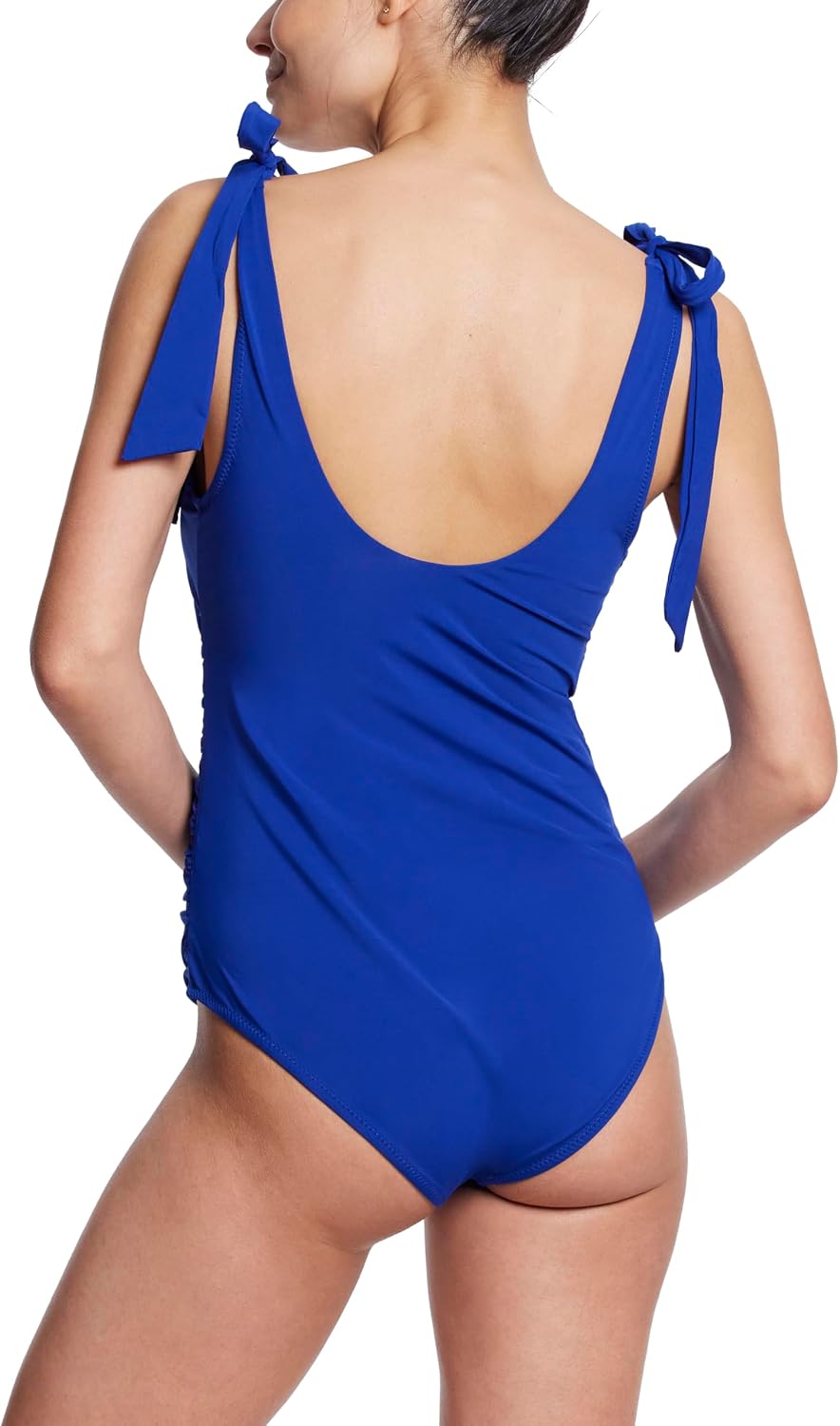
There’s a particular kind of swimwear shopper we hear from a lot — someone who’s already graduated past the fast-fashion impulse buy, has a sense that certifications matter (OEKO-TEX means a fabric has been tested for harmful chemicals; GOTS means the entire supply chain from fiber to finished garment meets organic standards), but isn’t quite ready to drop $220 on a single one-piece without being very sure it’s worth it. You’re comfortable spending $60–$110. You want the purchase to feel considered. And you keep landing on two names: Hanky Panky, the lingerie-turned-lifestyle brand, and Tropic of C, Candice Swanepoel’s Brazilian-inflected swim line. They sit in similar price windows, both lean into a sustainability narrative, and both photograph beautifully. But they’re doing very different things underneath the marketing surface — and once you understand that difference, the decision mostly makes itself.
That’s what this piece is for. We’ll walk through what each brand is actually selling, where the eco credentials hold up versus where they lean on aesthetics, and give you a clean decision frame by the end.
What You’re Actually Buying in the $60–$110 Swim Tier
First, a useful frame: the mid-tier swim market is genuinely crowded right now. Per Textile Exchange’s Preferred Fiber & Materials Market Report 2024, recycled nylon — most often ECONYL, a regenerated nylon made from ocean plastics and industrial waste — has become almost table-stakes language for brands positioning in this price band. That’s a good thing, but it also means “made with recycled materials” has become a marketing phrase that can range from 100% recycled content to a single recycled drawstring cord. Knowing which brands have third-party verification (an outside organization independently confirming the claim) versus self-reported sourcing is the core skill this tier demands.
The $60–$110 window sits between two very different pressures. Below it, brands are largely competing on trend and margin, with sustainability as an afterthought. Above it — in the $150–$300 zone where Vitamin A Swim, Onia, and Patagonia operate — brands have typically built their whole identity around supply-chain transparency. The mid-tier is the contested ground: some brands are working their way up toward genuine accountability; others are working their way down from a premium price with thinner credentials. Knowing which direction each brand is traveling matters.
Hanky Panky’s Swim Entry: Comfort-Led, Certification-Light
Hanky Panky built its reputation in intimate apparel — specifically on its stretch-lace underwear, which earned a loyal following for fit and softness over several decades. When the brand extended into swim, it carried that identity forward: the emphasis is on comfort fit, inclusive sizing, and the kind of relaxed silhouette that doesn’t require a specific body type to work.
From a sustainability standpoint, Hanky Panky occupies an honest middle ground. Good On You’s brand rating profile for Hanky Panky notes that the brand has made public commitments around responsible sourcing but stops short of the third-party certifications that eco-focused shoppers often use as a shortcut. There is no current GOTS certification on its swim line, and ECONYL-specific claims are not consistently itemized at the product level. What the brand does lead with is OEKO-TEX STANDARD 100 compliance on certain fabrications — meaning those specific fabrics have been tested and verified to be free of harmful substances. That’s a real and meaningful credential, but it’s a fabric-level test, not a supply-chain audit. It tells you the cloth against your skin is safe; it doesn’t tell you about labor conditions upstream or whether the recycled-content claim on the hangtag has been independently verified.
Where Hanky Panky wins clearly is in the wear experience that owners consistently report: generous stretch, soft hand-feel, and coverage that holds through activity. Reviewers across multiple retail platforms note that the sizing runs true and the construction is durable across a full season of wear. For a buyer prioritizing comfort and inclusive fit over rigorous eco-documentation, this is a defensible choice at the $65–$95 price point where most of their swim pieces land.
The tradeoff is explicit: you’re buying a comfort-optimized product from a brand with partial eco-transparency. That’s not a failing — it’s a positioning choice. But if third-party certification is your threshold, Hanky Panky’s swim line currently doesn’t clear it.
Tropic of C: Aesthetic Authority, Evolving Accountability
Tropic of C launched in 2018 with a clear editorial vision — Candice Swanepoel’s Brazilian roots translated into high-cut silhouettes, earth and ocean tones, and a slow-fashion ethos built around pieces you’d wear for multiple seasons. Per Business of Fashion’s coverage of celebrity swim labels in 2023, Tropic of C was identified as one of the few celebrity-founded lines that invested in supply-chain development from early on rather than licensing the brand to a manufacturer post-launch.
The brand uses ECONYL regenerated nylon as its primary fabrication — and unlike some mid-tier brands that use the term loosely, Tropic of C has historically been consistent about disclosing ECONYL content at the product level. ECONYL is produced by Aquafil and carries its own certification framework, meaning the recycled-content claim is independently traceable rather than self-reported. Ecocult’s 2024 guide to reading eco-swim labels specifically cites ECONYL documentation as one of the more reliable fiber-level claims a consumer can act on.
Good On You’s rating profile for Tropic of C gives the brand a “Good” rating — their second-highest tier — with particular credit for material sourcing and a developing (but not fully complete) picture on labor transparency. The brand manufactures in Brazil, which means labor-standard auditing falls under Brazilian regulatory frameworks rather than the more widely recognized Fair Trade or SA8000 certifications that some premium brands carry. That’s a gap worth naming, not to disqualify the brand but to give you an accurate picture.
The price point — typically $85–$110 for one-pieces and bikini sets — reflects both the ECONYL material cost and the brand’s aesthetic positioning. Reviewers consistently describe the construction as clean and premium-feeling, with hardware and stitching that hold up across a season. The silhouettes read as editorial without being impractical, which is part of why the brand has developed a following among stylists and resort-wear buyers as well as end consumers.
The tradeoff here is also explicit: you’re buying verified-fiber sourcing and strong aesthetic credentials from a brand that still has developing (not fully audited) labor transparency. For most buyers in this tier, that’s a reasonable position — better than most alternatives at the price point, not yet at the level of a Patagonia or Vitamin A.
By the Numbers
| Brand | Primary eco-claim | Third-party verification | Price range (one-piece) | Good On You rating |
|---|---|---|---|---|
| Hanky Panky Swim | OEKO-TEX STANDARD 100 (fabric-level) | Partial (fabric only) | $65–$95 | Not rated / partial data |
| Tropic of C | ECONYL regenerated nylon | ECONYL-level (fiber traceable) | $85–$110 | ”Good” (2nd tier) |
How to Actually Decide Between Them
Here’s the decision frame we’d use if we were buying today.
If your priority is fit comfort and inclusive sizing: Hanky Panky is the call. Owners consistently report better stretch and size range, and the OEKO-TEX STANDARD 100 credential means the fabric safety concern is addressed. You’re accepting a thinner eco-story in exchange for a proven fit record. That’s a legitimate trade.
If your priority is verified recycled-content and editorial silhouette: Tropic of C is the call. The ECONYL fiber claim is independently traceable — which, per OEKO-TEX’s own documentation on certification layers, is a meaningfully higher bar than self-reported recycled content. The silhouettes skew more sophisticated, and the brand has more explicit eco-positioning even if it isn’t yet complete on labor transparency.
If you’re building toward a premium-tier swim wardrobe: treat this mid-tier purchase as a bridge, not a destination. Tropic of C is the better on-ramp to the values and aesthetic world of Vitamin A or Onia — it builds the same habit of checking fiber documentation and reading brand ethics profiles. Hanky Panky, by contrast, is more natural in a wardrobe that prioritizes versatility and everyday wearability over editorial positioning.
If labor transparency is non-negotiable for you right now: honestly, neither brand fully clears that bar at this price tier. You’d need to step up to brands like Patagonia (which publishes a detailed supplier list and Fair Trade certification) or Girlfriend Collective (which holds bluesign certification and is explicit about its factory relationships). Both operate at the $70–$130 range — adjacent to this window — and the accountability gap is significant. Ecocult’s 2024 eco-swim breakdown is worth reading in full if this is your sticking point; it maps the certification landscape in plain language and is one of the cleaner guides available.
The Honest Bottom Line
Both brands represent real progress from where the mid-tier swim market was five years ago. Neither is the finished article on eco-accountability. Tropic of C has the stronger and more verifiable sustainability story; Hanky Panky has the stronger fit and comfort record.
What neither of them is: a shortcut to premium-tier ethics at mid-tier prices. The $150–$300 brands earn that premium partly through the cost of genuine supply-chain auditing. If the full accountability picture matters to you — and there are good reasons it should — the honest advice is to either step up to a certified premium brand or to choose Tropic of C as your mid-tier option while understanding exactly what you are and aren’t getting. Eyes open, neither choice is wrong. But only one of them gives you a traceable fiber trail, and in 2026, that’s the bar worth setting as your minimum.