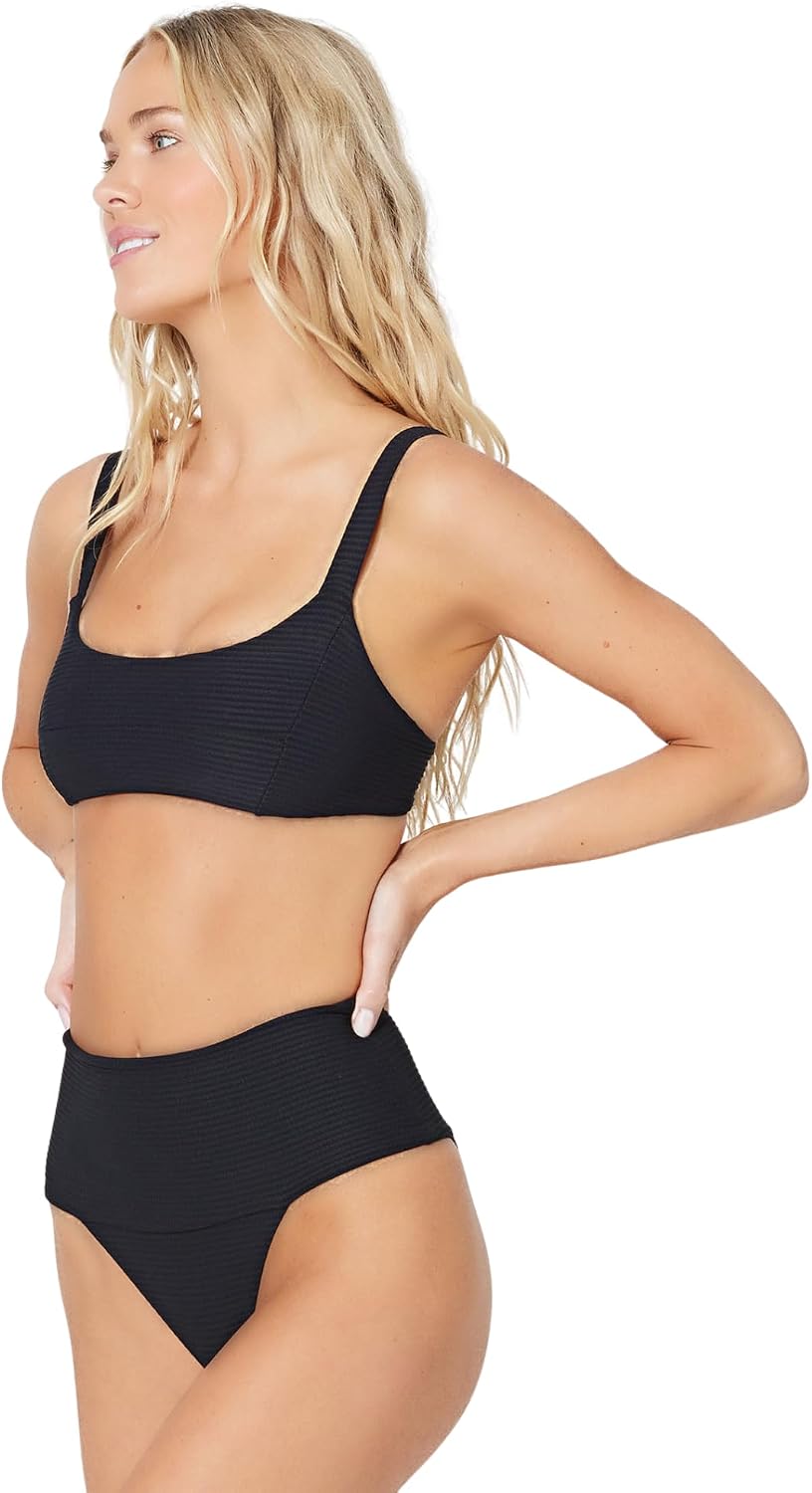
You’re standing at a familiar decision point: you want a swimsuit that doesn’t cost the earth — literally or figuratively — but you’re not quite ready to commit $200+ to a single piece until you understand exactly what those extra dollars are buying. That’s a completely reasonable place to be. The swimwear market right now is full of brands using words like “sustainable” and “eco-conscious” as aesthetic signifiers rather than verifiable standards. So when a brand like L*Space positions its Eco Chic collection at $106–$110 per piece, the fair question isn’t “is this cute?” (it is) — it’s “what exactly am I paying for, what certifications back it up, and how does this slot into a considered wardrobe versus the alternatives at $70 and $200?” This piece answers exactly that. We’ll break down the material story, name the tradeoffs honestly, and give you a clear decision rule at the end.
What L*Space’s Eco Chic Line Actually Is (Material Story First)
L*Space is a California-based swimwear brand that’s been running since 1989, and its Eco Chic collection represents the brand’s most direct sustainability play. The line is built primarily from ECONYL regenerated nylon — recycled nylon yarn made from recovered ocean fishing nets, fabric scraps, and industrial plastic waste, manufactured by the Italian company Aquafil. ECONYL is one of the most recognized recycled-fiber programs in swimwear; for context, it’s the same base material used by higher-tier brands like Vitamin A Swim and Mara Hoffman at the $180–$250 price point.
ECONYL matters for a specific reason: conventional nylon production is petroleum-intensive and generates nitrous oxide, a greenhouse gas significantly more potent than CO₂. Per Textile Exchange’s Preferred Fiber & Materials Market Report 2023, recycled nylon carries a meaningfully lower climate footprint per kilogram than virgin nylon, though the exact reduction varies by production method. ECONYL’s own published lifecycle data claims up to a 90% reduction in global warming impact versus virgin nylon from raw materials — a figure worth knowing, but worth treating as manufacturer-reported rather than independently audited.
The Eco Chic line does not carry a bluesign certification (a factory-level chemical and process standard) or a GOTS (Global Organic Textile Standard) certification, which is expected since GOTS applies primarily to organic natural fibers, not recycled synthetics. What you’re evaluating here is: ECONYL fiber credibility + brand-level sourcing claims, without a third-party factory audit layered on top.
Good On You’s brand rating for L*Space, available at goodonyou.eco, currently scores the brand “It’s a Start” — their middle tier — reflecting partial supply-chain transparency and the ECONYL material commitment, but noting gaps in living-wage verification and full factory disclosure. That’s a useful calibration point. It’s not a red flag, but it’s a ceiling.
The Certification Gap: What You Get at $106 vs. What You Give Up
This is the tradeoff worth naming explicitly, because at the mid-tier price point, buyers often assume certification parity with premium brands. It doesn’t work that way.
By the numbers:
| Price tier | Example brands | ECONYL | Bluesign | OEKO-TEX | Factory transparency |
|---|---|---|---|---|---|
| $70–$130 | Girlfriend Collective, L*Space Eco Chic | Often yes | Rare | Occasional | Partial |
| $150–$300+ | Vitamin A Swim, Patagonia, Mara Hoffman | Often yes | Common | Common | Higher |
OEKO-TEX STANDARD 100, explained at oeko-tex.com, certifies that every component of a finished textile — fibers, dyes, auxiliaries — has been tested for harmful substances. It’s a consumer-safety standard more than a climate standard, but it matters if you’re sensitive to skin-contact chemicals or buying for someone who is. L*Space’s Eco Chic line does not carry OEKO-TEX 100 certification as of this publication date.
Bluesign, per bluesign.com’s system criteria, certifies that a manufacturing facility meets strict standards for chemical use, water consumption, and worker safety — it’s the factory-floor accountability layer. Without it, you’re trusting brand-level claims rather than a third-party audit of the manufacturing environment.
What this means practically: the ECONYL fiber itself is a credible sustainability signal. The surrounding supply-chain story — factory conditions, dye chemistry, finishing treatments — is less verifiable at this price point than it would be from a Patagonia or a Vitamin A Swim. Per Business of Fashion’s analysis “The Sustainability Gap in Swimwear,” this mid-tier blind spot (credible fiber, limited factory audit) is one of the most common structural patterns in the $100–$130 price range across the category.
This isn’t a reason to walk away. It’s a reason to calibrate expectations accurately.
The Style Case: Where L*Space Genuinely Leads
Here’s where the honest assessment cuts the other way. L*Space has a legitimate aesthetic edge that’s worth naming without apology.
The Eco Chic line is designed in California with a point of view — not a generic “sustainable basics” sensibility. Reviewers across platforms consistently note the fit engineering: adjustable ties, ruching at the hips, and coverage options that work across a broader range of bodies than many competitors at this price point. The color stories each season tend to run sophisticated rather than trend-chasing — a muted terracotta, a dusty sage, a classic navy — which means these pieces integrate into a capsule wardrobe rather than dating themselves in a single season.
For the stylists and boutique buyers in our readership: the Eco Chic line photographs well and has a resort-wear polish that justifies placement in editorial and shop contexts. It doesn’t scream “eco swim” in the way that some sustainability-forward brands do at the expense of visual coherence.
Ecocult’s sustainable swimwear guide consistently notes that consumer adoption of eco-friendly swimwear accelerates when the aesthetic barrier is low — meaning, when shoppers don’t feel they’re making a visual compromise for an ethical gain. L*Space Eco Chic clears that bar in a way that some better-certified competitors at the same price point do not.
The Honest Comparison: Mid-Tier Alternatives Worth Knowing
If you’re at the decision point between L*Space Eco Chic and its closest neighbors, here’s the direct frame:
Girlfriend Collective ($68–$88, ECONYL and recycled PET, partial OEKO-TEX): Lower price, strong certification story on specific pieces, but the aesthetic runs more athletic-minimalist than resort. If your wardrobe context is active or more casual, this often wins on transparency-per-dollar. If it’s editorial or upscale-resort, L*Space’s design language tends to land better.
Summersalt ($70–$110, recycled nylon, partial supply-chain disclosure): Comparable price range, strong fit reputation (owners consistently report high satisfaction on fit inclusivity across extended review aggregations), but the sustainability story is similarly mid-tier — good fiber, limited factory audit. Essentially a lateral trade rather than an upgrade.
Vitamin A Swim ($180–$240, ECONYL, bluesign-certified fabric, deeper factory transparency): This is what the full premium is buying — the same base fiber with a more audited supply chain, deeper brand transparency on sourcing, and a significantly stronger ethical profile per Good On You ratings. If certification depth is your primary driver, the $70–$130 gap between L*Space and Vitamin A is largely the cost of that supply-chain accountability layer.
The decision rule is genuinely simple once you frame it this way: L*Space Eco Chic is not competing with Vitamin A on transparency. It’s competing with Summersalt and Girlfriend Collective on a combination of design quality, fiber credentials, and value. Within that peer group, it holds up well — and beats both on aesthetic polish at similar or comparable price points.
Who Should Buy the L*Space Eco Chic Line (And Who Shouldn’t)
If you’re building a considered eco-swim wardrobe and the $150–$300 tier isn’t accessible right now, or you’re supplementing a premium core wardrobe with mid-tier pieces, the Eco Chic line is a genuinely defensible choice. The ECONYL fiber commitment is real, the design quality is above average for the price point, and reviewers consistently rate it highly on both fit and longevity. You’re accepting a trade: credible fiber story, partial supply-chain transparency, no bluesign or OEKO-TEX 100 on the finished garment.
If your primary decision driver is third-party certified factory accountability — not just fiber sourcing but the full audit chain — this line isn’t there yet, and you should either move up to Vitamin A Swim or Patagonia’s swim offerings, or look carefully at which Girlfriend Collective pieces carry OEKO-TEX certification on specific styles.
If you’re a boutique buyer or stylist curating for clients or editorial: the aesthetic coherence and fit reputation make these worth stocking or recommending, provided you’re transparent with your clients about where the certification story ends. In the mid-tier conversation, that transparency is exactly what builds long-term trust.
The decision rule: If design quality and fiber credibility at $106–$110 is your brief, LSpace Eco Chic is the mid-tier pick. If certified factory accountability is non-negotiable, budget up to the $180+ tier or prioritize Girlfriend Collective’s certified styles at the lower end. There’s no version of this category where $110 buys you everything the $230 tier delivers — but LSpace makes a strong case that it can buy you most of what matters in terms of aesthetics and fiber integrity.
Sources referenced: Good On You brand rating for LSpace at goodonyou.eco; Textile Exchange Preferred Fiber & Materials Market Report 2023; OEKO-TEX STANDARD 100 explainer at oeko-tex.com; Bluesign system criteria overview at bluesign.com; Ecocult sustainable swimwear guide; Business of Fashion “The Sustainability Gap in Swimwear.”*