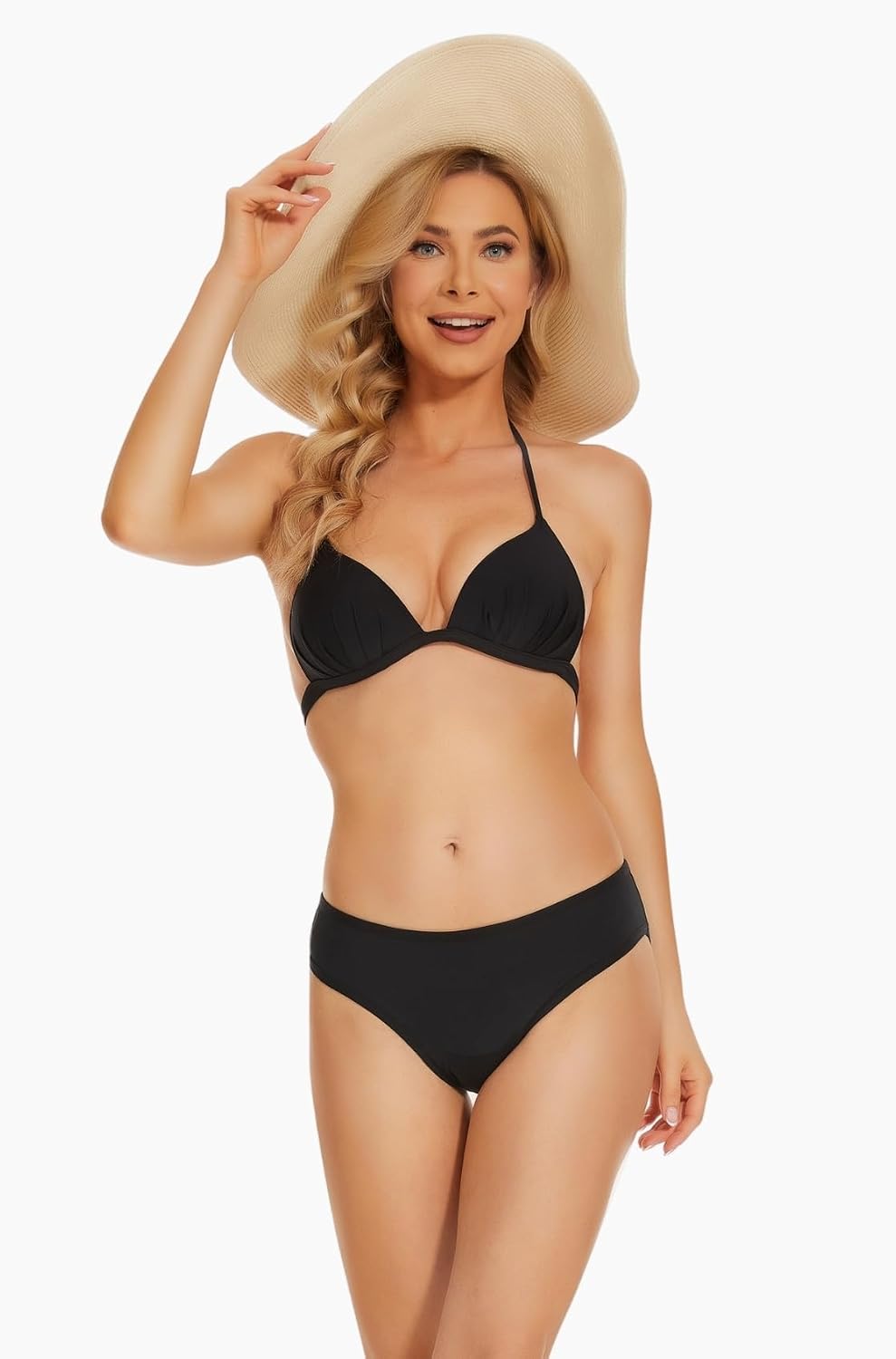
Let’s be honest about a gap that the sustainable swimwear world has been slow to name out loud. If you’ve spent any time researching eco-conscious swim — comparing ECONYL (recycled nylon made from reclaimed fishing nets and ocean waste) against GOTS-certified organic cotton (a textile standard that tracks chemical inputs from farm to finished garment), or parsing bluesign approvals (a third-party system that audits factories for resource efficiency and worker safety) — you’ve probably noticed that the conversation stays very comfortable inside a narrow lane. Beautiful one-pieces for resort travel. Flattering bikinis in deadstock fabric. Longline rash guards for the reef-conscious surfer. What you rarely see discussed, even in otherwise rigorous eco-fashion publishing, is period swimwear — suits built with an absorbent inner layer that replaces or backs up a tampon — or mastectomy swimwear, which is cut and engineered to accommodate a prosthesis or flat closure after breast surgery. Both categories solve genuine, urgent problems for enormous numbers of swimmers. Both are almost entirely absent from the sustainable fashion conversation. This article is an attempt to fix that.
Why the Sustainable Market Has Mostly Sat This Out
The short answer is margin pressure and minimum order quantities. Period swimwear requires a multi-layer construction — typically an absorbent core bonded to a moisture-wicking liner — that adds material cost and manufacturing complexity. Mastectomy suits need integrated pockets sized to standard prosthesis weights, reinforced side panels, and often a softer interior fabric to protect post-surgical skin. Both categories demand pattern grading expertise that goes well beyond a standard bikini cut.
For a small eco-brand already navigating the cost premiums of certified recycled nylon or organic cotton, adding functional engineering to a low-volume specialty SKU is a steep ask. Ecocult’s 2024 piece “Why Sustainable Swimwear Still Has an Inclusivity Problem” frames it plainly: the brands best positioned to invest in inclusive engineering tend to be larger, and larger brands tend to have the messiest supply chains. The brands with the cleanest supply chains tend to be small and nimble — and that nimbleness evaporates when you’re trying to develop a technically complex new product category.
The result is a market split that forces most shoppers into a values compromise they shouldn’t have to make.
The Period Swimwear Landscape: Where Sustainability Actually Shows Up
Period swimwear became a mainstream retail category around 2020, driven largely by the same consumer cohort pushing eco-swim into the premium tier. Vogue’s 2025 roundup of period swimwear options noted that shopper demand had outpaced sustainable supply — most of the technically strong options were coming from brands with conventional supply chains, while eco-certified options lagged on absorbency and construction quality.
Here’s where things stand as of mid-2026, based on published brand materials and aggregated reviewer reporting:
The tradeoff map, period swim:
| Brand tier | Sustainability credential | Absorbency rating | Price range |
|---|---|---|---|
| Modibodi | OEKO-TEX Standard 100 certified fabric | Light to heavy flow | $60–$90 |
| Speedo period swim line | Conventional supply chain | Light to moderate | $45–$75 |
| Wuka Swim | B Corp certified, recycled nylon used | Light to moderate | $55–$85 |
| Smaller eco-brand entrants | Varies; few third-party certifications | Typically light only | $70–$130 |
Modibodi is the name that keeps surfacing in aggregated reviews as the functional benchmark. Their period swimwear uses a bonded three-layer system — an outer shell, an absorbent middle layer, and a leak-resistant base — and the outer fabric carries OEKO-TEX Standard 100 certification, meaning it’s been tested against a list of harmful substances per the OEKO-TEX current-edition criteria. That’s not the same as GOTS or a full recycled-material story, but it’s a meaningful minimum: you’re not wearing a fabric that off-gasses residual chemicals against skin that may already be sensitive. Reviewers consistently report that Modibodi holds up to a full swim session at light-to-moderate flow without the anxiety of a tampon backup, which is the primary use case for most buyers in this category.
Wuka Swim is the brand that comes closest to threading the needle between functional performance and eco-credentials. Their B Corp certification means their entire business — not just one product line — has been audited against social and environmental standards. Their use of recycled nylon is documented in published brand materials. The tradeoff, per reviewer consensus, is that absorbency tops out at moderate flow, making it a better fit for lighter days or as a tampon backup rather than a full replacement.
If X, then Y:
- If your priority is maximum leak protection and OEKO-TEX certified fabric is your minimum acceptable bar: Modibodi is the clear call.
- If you want the cleanest supply-chain story and are managing light flow or using the suit as a backup layer: Wuka Swim earns that spend.
- If you’re shopping the $150–$300+ premium tier and hoping a brand like Vitamin A or Onia will meet you here: they haven’t entered the category yet as of this publication date.
Mastectomy Swimwear: An Even Harder Sustainability Gap
The mastectomy swimwear gap is sharper, and the stakes feel higher. Harper’s Bazaar’s 2025 guide to mastectomy swimwear options noted that the category had improved meaningfully in terms of aesthetic range and size inclusivity, but that eco-credentials remained almost entirely absent. Most mastectomy-specific suits are produced by medical-adjacent brands — Amoena is the name most frequently cited by reviewers and breast cancer advocacy organizations — that have optimized hard for prosthesis fit and post-surgical comfort, with sustainability largely an afterthought.
This matters practically because post-surgical skin is often more chemically sensitive, particularly after radiation. The argument for OEKO-TEX certified or GOTS-organic fabrics isn’t just an environmental one — it’s a skin-contact one, and it’s arguably more urgent here than in conventional swimwear.
By the numbers:
- Amoena, the category benchmark, does not currently publish OEKO-TEX, GOTS, or bluesign certifications for their swimwear line (per their public materials as of 2026).
- Good On You’s brand ratings database rates most mastectomy-specialist brands as “It’s a Start” or unrated, reflecting limited public supply-chain disclosure.
- The functional mastectomy pocket standard — sized to accommodate a size 1–3 prosthesis securely — adds approximately 15–20% to pattern and manufacturing cost over a conventional suit, per industry estimates cited in Textile Exchange’s supply-chain complexity reporting.
The honest picture is that if you need a mastectomy suit that fits well, holds a prosthesis securely, and uses interior fabric gentle enough for post-surgical skin, you are currently being asked to set sustainability credentials aside. That’s a real ask, and this publication doesn’t think you should have to pretend it isn’t.
What you can do: prioritize OEKO-TEX Standard 100 certification as your minimum filter even within conventional brands, since that at least addresses the chemical-exposure concern that’s most clinically relevant. Ask brands directly about their fabric sourcing — the ones with genuine transparency will have a documented answer. The ones that deflect or offer marketing language without specifics are telling you something.
What a Values-Aligned Decision Framework Actually Looks Like Here
For readers who are used to comparing ECONYL against recycled polyester, or weighing a GOTS certification against a Fair Trade claim, the inclusive swim category requires recalibrating what “good enough” looks like. Here’s the decision frame we’d apply:
Tier 1 — Non-negotiable: Does the fabric carry any third-party chemical-safety certification? OEKO-TEX Standard 100 is the minimum. This is especially critical for mastectomy buyers and anyone with hormone-sensitive health concerns, where avoiding residual dyes and finishing chemicals is a clinical priority, not just a preference.
Tier 2 — Meaningful if present: Is there any recycled material content? Even conventional brands have begun incorporating recycled nylon into their performance fabrics. It won’t be the full ECONYL story, but it reduces virgin resource demand at the margin.
Tier 3 — Nice to have: B Corp, Fair Trade factory certification, or a published living-wage commitment. These matter, and you should reward brands that have them — but in a category where functional engineering is still immature on the sustainable side, holding out for a perfect supply chain profile means sitting out the water.
The honest tradeoff statement: You are not currently being offered a $250 mastectomy suit in certified ECONYL with a Fair Trade factory stamp and prosthesis-specific engineering. That product does not exist in the 2026 market. What you are being offered is a choice between functional performance and supply-chain purity — and in this specific category, functional performance affects physical health outcomes in ways that make it the reasonable priority.
Where This Market Goes Next
The signal to watch is whether any of the mid-tier certified brands — Girlfriend Collective or Summersalt, both of which have demonstrated willingness to invest in inclusive sizing — will enter either the period or mastectomy category. Neither had announced product development in these areas as of this publication date, but both have the manufacturing relationships and scale to make the unit economics work in a way that a smaller eco-brand cannot.
The other signal is consumer-driven: the shoppers reading this article are exactly the cohort whose purchase behavior and direct brand feedback accelerate product development. Good On You’s brand ratings database notes that consumer-submitted transparency requests have measurably moved disclosure scores for several swim brands over the past two years. Asking your favorite certified brand, directly and publicly, why they don’t make a period swim option is not nagging — it’s market signal.
For now, the practical summary is this: shop for function first in both categories, apply OEKO-TEX as your chemical-safety floor, document and celebrate the brands that are trying, and treat the gap itself as information about where the sustainable fashion industry’s inclusivity commitments are still more aspirational than operational.
The water is for everyone. The industry just hasn’t fully caught up to that yet.