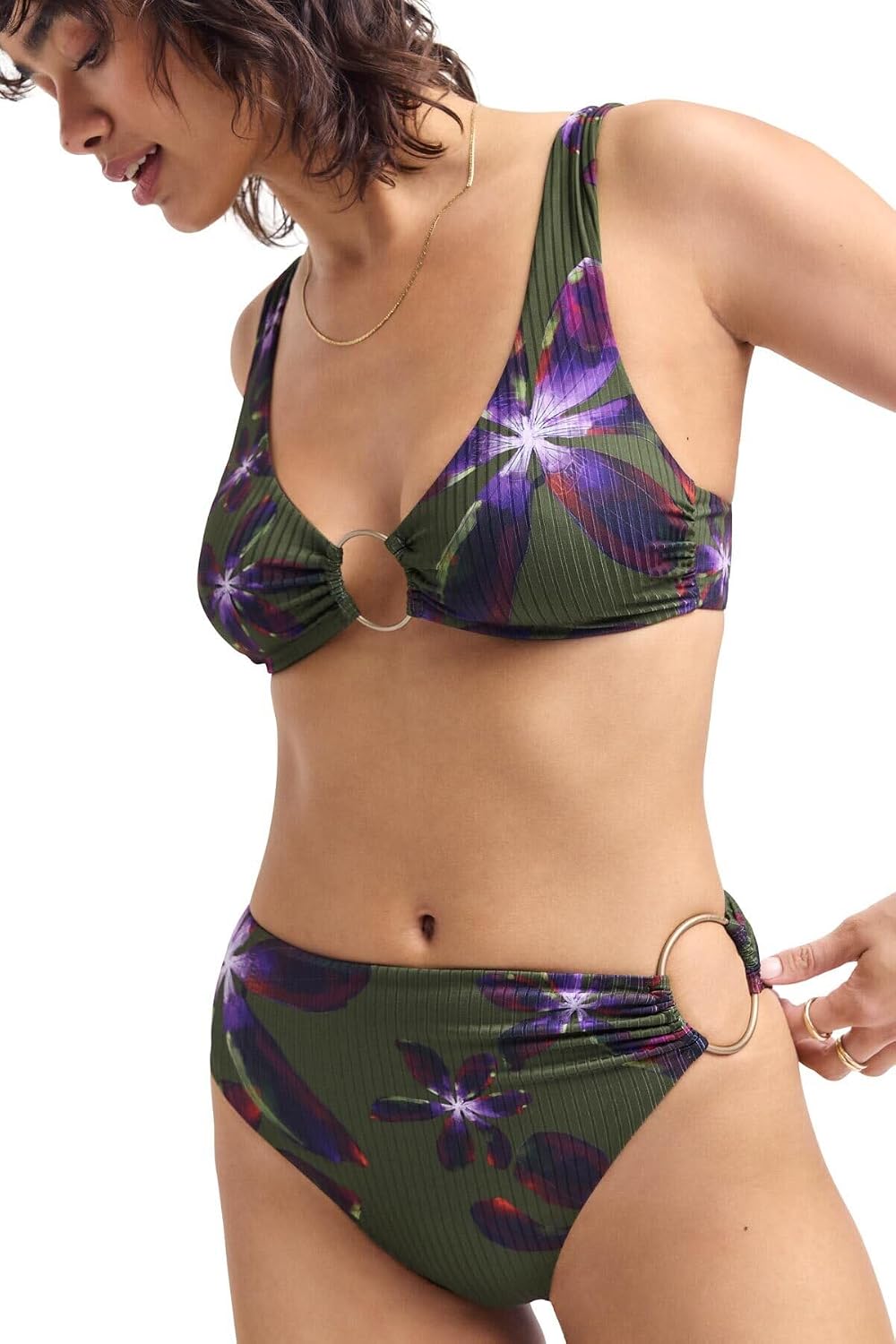
Let’s be honest about what you’re actually deciding here. Vitamin A Swim makes separates — meaning you buy a top and a bottom independently, mix sizes and silhouettes, and theoretically build a suit that fits your actual body rather than a size-chart average. That flexibility sounds obvious, but it costs money: a single Vitamin A top runs $100–$130, and a matching bottom lands at $85–$110, putting a complete set comfortably above $200. Before you commit to that, you deserve a straight answer to a real question: is this price point justified by material quality, ethical sourcing, and genuine wearability — or are you partly paying for the brand’s California-cool aesthetic? We spent time in the brand’s product specs, aggregated owner reviews, Good On You’s brand rating profile, and sustainable fashion coverage from Vogue and Business of Fashion to give you a decision-ready answer. Spoiler: the answer is mostly yes, but which pieces you choose matters more than you’d think.
| EDITOR'S PICK[Vitamin A Women's Swimwear Biki…](https://www.amazon.com/dp/B0GFYB4STP?tag=greenflower20-20) | Mid-tier[Vitamin A Women's Swimwear Biki…](https://www.amazon.com/dp/B0GFYPV76L?tag=greenflower20-20) | Budget pick[Vitamin A 2024 Cruise Women's S…](https://www.amazon.com/dp/B0DBXJQV4G?tag=greenflower20-20) | |
|---|---|---|---|
| Material | Ecorib | Ecorib | Broderie |
| Style | Top | Bottom | Cover-up |
| Size | Small | Medium | Medium |
| Color | Watercolor Orchid | Olive | Black |
| Collection | — | California High Leg | Flora Beachside |
| Coverage | — | High Leg | Short |
| Price | $115.00 | $90.00 | $75.00 |
| See on Amazon → | See on Amazon → | See on Amazon → |
What You’re Actually Buying When You Pay Vitamin A Prices
Vitamin A’s core material story centers on EcoLux and BioRib — proprietary fabric names the brand uses for fabric made from ECONYL regenerated nylon (nylon reclaimed from ocean-bound fishing nets, carpet, and industrial plastic waste) and, in some styles, Carvico Vita, an Italian performance nylon with OEKO-TEX STANDARD 100 certification. OEKO-TEX STANDARD 100, for the uninitiated, is a third-party textile certification (issued by the OEKO-TEX organization) confirming that every component of a fabric has been tested against a list of over 100 harmful substances. It’s a meaningful baseline, not a full sustainability credential, but it matters for skin-contact garments.
Here’s where the brand differentiates from the mid-tier pack: Vitamin A manufactures in Los Angeles, using domestic cut-and-sew production. Business of Fashion’s 2025 premium swimwear market analysis noted that domestic U.S. production in swimwear commands a genuine cost premium — typically 30–50% above equivalent offshore production — because of labor compliance standards and shorter, more traceable supply chains. That’s not marketing; it’s overhead that shows up in the price tag.
Good On You’s brand rating profile for Vitamin A scores the brand positively on labor transparency and material traceability, noting the domestic manufacturing as a meaningful supply-chain differentiator, while flagging that the brand’s environmental impact disclosures could go deeper on water use and end-of-life fiber recovery. That’s a fair read. You’re buying into a supply chain that’s genuinely shorter and more accountable than most at this price point — but not a brand with the full lifecycle disclosure of, say, Patagonia.
By the numbers:
- ECONYL nylon diverts approximately 70,000 tons of nylon waste from landfills annually, per Textile Exchange’s 2024 Preferred Fiber & Materials Market Report
- Vitamin A tops: $100–$130 | bottoms: $85–$110 | complete sets: $185–$240
- OEKO-TEX STANDARD 100 tests against 100+ regulated substances — certification database searchable at oeko-tex.com
- LA-based production: traceable to roughly 2–3 supply-chain tiers vs. 5–8 tiers typical in offshore fast-swim brands
The Mix-and-Match Math: When Separates Actually Make Financial Sense
The pitch for separates is fit customization. If you wear a size 6 top and a size 10 bottom, you’ve been losing money on coordinated sets your whole swimwear life — either you buy a set and alter it, or you buy two sets and cobble a fit together. Separates solve a real problem.
But here’s the tradeoff that doesn’t get stated plainly enough: building a Vitamin A wardrobe as separates is only financially rational if you’re actually mixing pieces across multiple sets. If you’re buying one top and one matching bottom from the same colorway and wearing them exclusively together, you paid the separates premium for customized fit alone — which is worth it only if that fit genuinely makes the suit more wearable for you.
The real ROI on separates plays out like this: own 2 tops and 3 bottoms (5 pieces, roughly $500–$550), and you have 6 functional swimwear combinations. The per-outfit cost drops below $100 when you work the combinations. That’s the practitioner’s version of cost-per-use math, and it’s the frame that makes a $200+ entry point feel like the beginning of a capsule, not a splurge on a single suit.
Vogue’s 2025 sustainable swimwear roundup noted that premium-tier buyers are increasingly treating swimwear purchases as “anchor pieces” in a rotation — buying fewer, higher-quality items and styling them with different cover-ups, pareos, and accessories rather than accumulating volume. Vitamin A’s mix-and-match model is engineered for exactly this buyer.
The Silhouette Decision: Which Vitamin A Pieces Are Worth the Anchor Investment
Not every Vitamin A piece earns equal anchor status. Based on aggregated owner reviews and the brand’s own bestseller patterns, here’s how to read the lineup:
Tops worth anchoring on: The Sienna Top and the Laelia Bandeau consistently appear in owner reviews as the pieces buyers return to across seasons — reviewers specifically cite the EcoLux fabric’s recovery (meaning it bounces back to shape after wear and doesn’t sag when wet, a critical failure mode in cheaper recycled nylon). These are the tops worth spending toward the $130 ceiling on, because they’re built to be the foundation pieces you mix everything else around.
The brand’s more trend-forward tops — asymmetrical styles, heavily ruched designs — photograph beautifully but carry more seasonal risk. If you’re investing in a 3–5 year swimwear capsule, bias toward the cleaner silhouettes.
Bottoms worth anchoring on: The Ava Bottom (a high-waist brief) and the Sienna Bottom (mid-rise) are the workhorses in the lineup. Owners consistently report that the high-waist styles in BioRib hold compression across extended wear better than the lower-rise options, which makes sense given that rib-knit structures have inherently more structural recovery than flat knit. If you’re building a mix-and-match set, start with a high-waist anchor bottom — it reads as more intentional when paired with a mismatched top than a lower-rise brief does.
Where to be selective: Vitamin A’s one-size-fits-all styles and the heavily embellished pieces sit at the brand’s highest price points but offer the least mix-match flexibility. These are statement purchases, not capsule anchors. Buy them if you love them, but don’t count them as part of your separates strategy.
The Certification Question: Is ECONYL + OEKO-TEX Enough for This Price Point?
At $200+, you should be asking this directly. Here’s the honest comparison:
ECONYL (used by Vitamin A) is a regenerated nylon — meaningfully better than virgin nylon from an ocean waste recovery standpoint, but still a synthetic that sheds microplastics when washed. It’s not GOTS-certified (GOTS, the Global Organic Textile Standard, applies to organic natural fibers, not synthetics) and it doesn’t claim to be. ECONYL’s credential is waste diversion, not biodegradability.
OEKO-TEX STANDARD 100 tells you the fabric is safe against your skin. It doesn’t tell you about labor, water use, or end-of-life. It’s a necessary-but-not-sufficient bar for a brand at this price point.
Compared to competitors at similar pricing: Patagonia’s recycled nylon swimwear carries bluesign certification (a systemic manufacturing process standard covering water, energy, and chemical use) in addition to Fair Trade certification — a more comprehensive environmental and labor credential set. Girlfriend Collective at the $70–$130 tier also uses ECONYL with OEKO-TEX, which means Vitamin A’s material-science story isn’t dramatically differentiated from mid-tier competitors by certification alone. What does differentiate Vitamin A at this price is the domestic manufacturing transparency and the fit architecture of the separates system.
This is the honest practitioner’s read: you’re paying for domestic supply-chain accountability and a superior separates fit system more than you’re paying for a certification stack that outperforms the mid-tier field. That’s a legitimate value proposition — but know what you’re buying.
The Decision Rule: If X, Then Y
Here’s how to close the loop on your actual purchase decision:
If you’re a standard size in both top and bottom, and you’d be buying a matched set in one colorway: pause before committing at this price. Girlfriend Collective at $70–$130 uses comparable ECONYL with OEKO-TEX certification and offers strong colorways. The Vitamin A premium is harder to justify if you’re not leveraging the separates system.
If you’re between sizes, or carry different sizes on top and bottom: this is exactly what Vitamin A’s separates model is built for, and the $200+ entry point becomes rational — you’re paying for fit architecture that doesn’t exist at lower price points. Start with the Sienna Top + Ava High-Waist Bottom as your anchor pair, then add a second bottom in a complementary colorway.
If you’re building a 3-piece+ capsule (two tops, two or three bottoms): the per-combination cost-of-wear math resolves in Vitamin A’s favor by the second season. This is the buyer the brand is designed for, and the domestic production story rewards long-term owners who want a traceable, stable supply chain.
If your primary concern is certification depth (bluesign, GOTS, Fair Trade): Vitamin A’s current certification profile doesn’t lead the field. Patagonia at a comparable price point carries a stronger third-party credential stack. Be honest about whether domestic manufacturing transparency or third-party certification matters more to your specific values framework — both are legitimate, and they point to different purchases.
The $200+ price tag earns its place when you treat the purchase as the beginning of a separates capsule, not a single-suit splurge. Build toward at least three pieces, anchor on the brand’s core silhouettes in EcoLux or BioRib, and you’ve made an investment that compounds across seasons — which is, ultimately, what sustainable fashion is supposed to mean.